
How Golf Launch Monitors Are Manufactured for Accuracy and Performance
In modern golf training and swing analysis, the Golf Launch Monitors has become an indispensable piece of technology for professional players, coaches, and advanced amateurs. Whether it’s ball speed, launch angle, spin rate, or flight trajectory and landing point prediction, the accuracy of the data directly impacts training effectiveness and decision-making.
Why Manufacturing Process Determines the Accuracy of Golf Launch Monitors?
The accuracy of a Golf Launch Monitor fundamentally depends on how it is manufactured.
From sensor selection and algorithm logic to hardware assembly and calibration testing, every manufacturing step directly affects the reliability of the final data. This is why different brands, even with seemingly similar specifications, show significant differences in actual usage experience.
As an international brand specializing in the research and manufacturing of golf technology products, Lanifun focuses on manufacturing from the ground up, making “accuracy” and “stability” the core standards for Golf Launch Monitor design and production.
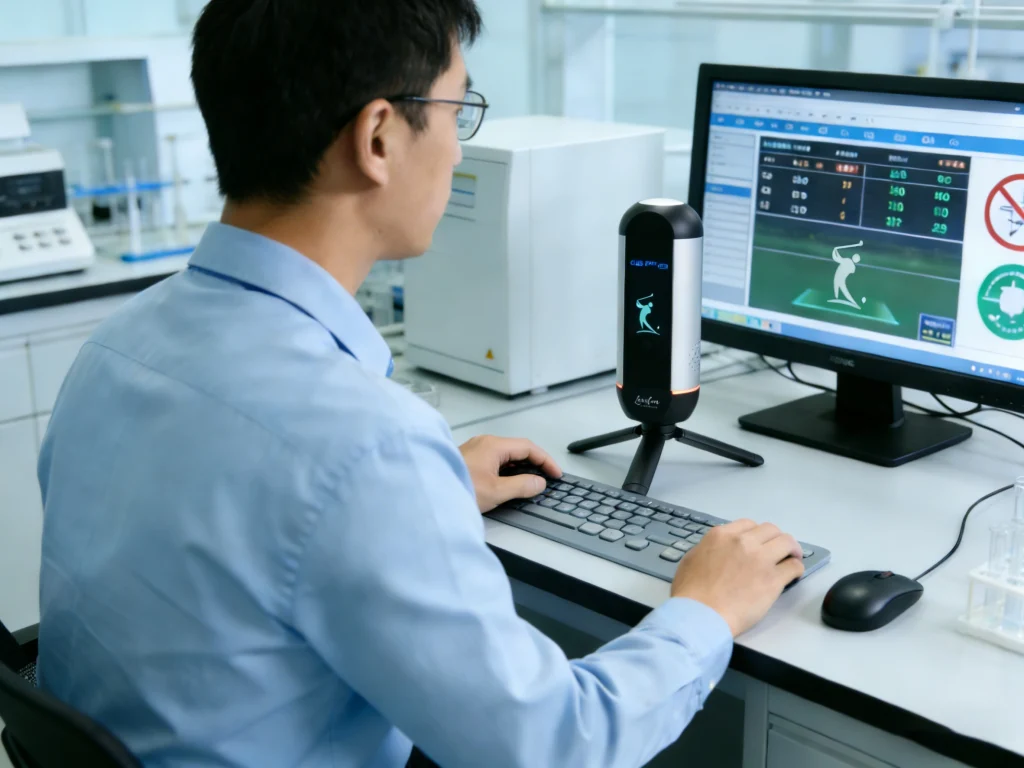
Analysis of the Core Technological Architecture of Golf Launch Monitors
At the manufacturing level, a professional-grade Golf Launch Monitor is not simply a stack of technologies, but rather the result of highly coordinated multiple systems.
1. Sensing System: The Precise Combination of Radar and Optics
Current mainstream Golf Launch Monitors typically employ the following two technological approaches:
- Doppler radar system: Used to capture ball speed, flight trajectory, and distance
- High-speed optical sensing system: Used to record clubface angle, impact point, and spin data at the moment of impact
In Lanifun’s manufacturing system, the core radar module and optical components come from long-proven industrial-grade solutions, and are further customized and calibrated according to the characteristics of golf, rather than using generic consumer-grade modules.
2. Data Processing Unit: Algorithms Determine "Usability"
Hardware acquisition is only the first step; what truly determines the performance of a Golf Launch Monitor is the back-end algorithm model.
The manufacturing stage must simultaneously consider:
- Noise filtering in real-world hitting environments
- Data compensation logic for different ball speed ranges
- Algorithmic differences between indoor and outdoor environments
Lanifun establishes a large database of real-world hitting data during the R&D phase, optimizing the algorithm model through repeated testing to ensure that the data is not only “measurable” but also “trustworthy.”
From Components to the Complete Device: The Manufacturing Process of the Golf Launch Monitor
1. Precision Component Selection and Supply Chain Control
In the manufacturing process of the Golf Launch Monitor, any small error can be amplified into data deviations. Therefore, the first step in manufacturing is not assembly, but component selection.
This includes:
- Radar chip frequency band stability testing
- Optical lens consistency verification
- Main control chip temperature drift and power consumption testing
Lanifun employs a tiered access mechanism in supply chain management to ensure that every batch of core components meets professional golf equipment standards, not just ordinary electronic product standards.
2. Modular Assembly and Structural Design
Structural design directly affects equipment stability.
If the internal layout is unreasonable, even with high-performance sensors, long-term errors may occur due to vibration and angle deviations.
Lanifun uses the following in manufacturing:
- Modular internal structure
- Fixed-angle bracket calibration
- Anti-vibration and anti-temperature difference structural design
This ensures that the Golf Launch Monitor maintains consistent performance even in high-frequency use and complex environments.
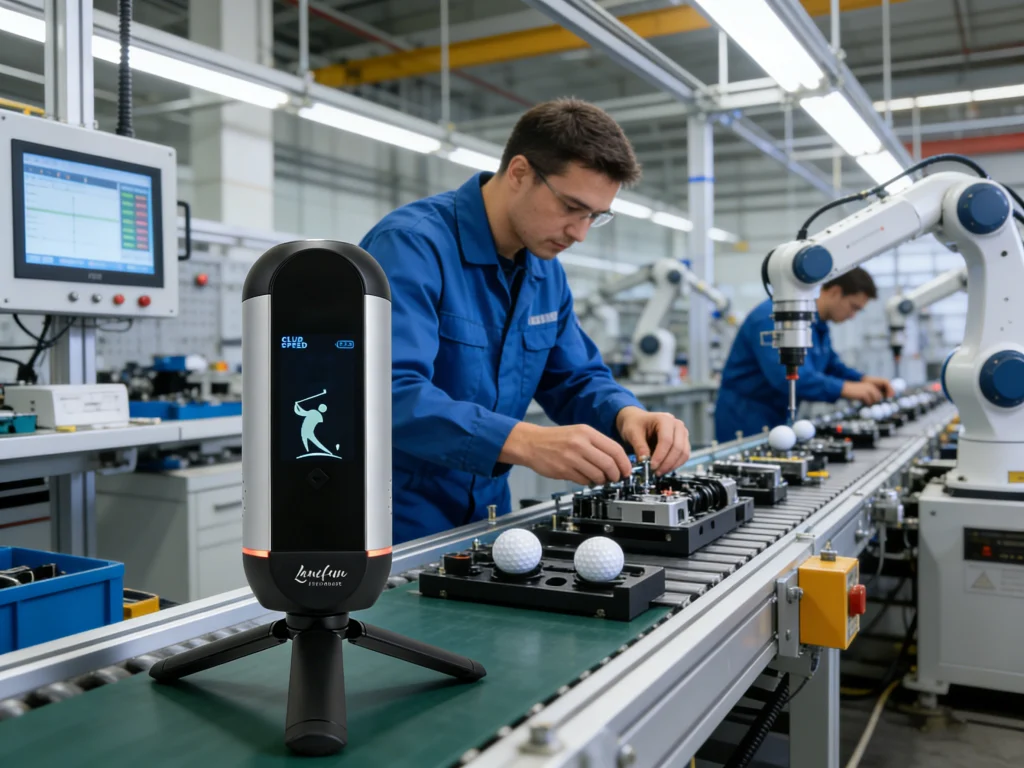
Calibration and Testing: The "Last Hurdle" to Accuracy
1. Multi-dimensional Calibration Process Before Shipment
A qualified Golf Launch Monitor must undergo rigorous factory calibration, not simply be “plug and play.”
Lanifun’s calibration process includes:
- Standard ball speed range testing
- Comparison of different spin rate models
- Multi-angle ball striking simulation
Each device generates an independent calibration record before shipment to ensure that the measurement results meet the predetermined error range.
2. Long-term Stability and Consistency Testing
Accuracy is not just about being “accurate the first time,” but about being “accurate in the long term.”
Therefore, during the manufacturing testing phase, the following are also performed:
- Long-term continuous operation testing
- High and low temperature environment simulation
- Data consistency regression analysis
This is the essential difference between a professional-grade Golf Launch Monitor and ordinary rangefinding devices.
How Does Manufacturing Affect the Actual Performance Experience of the Golf Launch Monitor?
From a user’s perspective, manufacturing quality ultimately manifests itself in the following aspects:
- Is the data stable and repeatable?
- Is there consistent logic when used by different players?
- Are there significant discrepancies between indoor and outdoor use?
- Does it require frequent recalibration after long-term use?
Lanifun’s core objective in manufacturing is not to pursue “paper specifications,” but to ensure that the Golf Launch Monitor has long-term reliability in real training scenarios.
Lanifun's Manufacturing Philosophy: Golf Technology Centered on Accuracy
As an international golf product brand, Lanifun is not simply an equipment assembler, but is involved in the entire process of creating Golf Launch Monitors, from research and development to manufacturing and testing.
Our manufacturing philosophy can be summarized in three points:
- Centered on data reliability
- Based on real-world golf scenarios for testing
- Aiming for long-term stability rather than short-term performance
It is this philosophy, starting from the manufacturing source, that makes Lanifun’s Golf Launch Monitors more suitable for professional training, teaching analysis, and advanced players.
Conclusion: A Truly Excellent Golf Launch Monitor Begins at the Manufacturing Stage
Discussions about Golf Launch Monitors on the market often focus on parameters, functions, and price, but what truly determines the value of a product is the manufacturing logic behind it.
From sensor selection to structural design, and then to calibration and testing, every step is responsible for “accuracy” and “performance.”
For users who pursue a high-quality training experience, choosing a brand with a mature manufacturing system and technological expertise is far more important than simply comparing parameters.
Lanifun will continue to focus on the manufacturing and technological upgrading of Golf Launch Monitors, providing reliable data support to global golf users with professional manufacturing capabilities.