
In golf, short game tips technique often determines the final score. Whether it’s chipping, pitching, or the ability to recover from the green, the more consistent your short game performance and the more accurate your shot placement, the more effectively you can lower your score. This article will provide a comprehensive overview from multiple perspectives, including technical principles, training methods, details of the stroke, and ways to improve consistency, offering golfers a systematic set of short game tips.
Understanding the Importance of Short Game Technique: The Section with the Highest Score Contribution
The short game zone generally refers to all shots within 30 yards of the green. Its characteristics include short distance, sensitive placement, and extremely high rhythm requirements. Statistically, the biggest difference between professional and amateur players often occurs in the short game zone, not the long game zone.
The reasons why short game determines the score include:
1. Every shot directly affects getting to the green.
Even a few centimeters of deviation in the landing point can significantly increase the roll distance.
2. The quality of contact determines the spin, bounce, and stopping ability of the shot.
A slight off-center shot can easily result in a flyaway, excessive roll, or a thick shot.
3. Consistency is key.
A good shot in one moment is not important; the ability to repeat a consistent motion is true skill.
4. Short game has low tolerance for error.
It’s not that the farther the distance, the greater the chance of error; rather, the shorter the distance, the more technical details are required.
Therefore, from beginners to competitive golfers, systematic training in short game skills is essential.

Key Steps to Improve Short Game Skills
1. Stance Stability: The Foundation of Consistency
Many amateur golfers have inconsistent short games not because of fundamental problems with their swing, but because their stance changes too much with each shot. To improve consistency, the following basic stance must be maintained consistently:
- Feet slightly narrower than shoulder-width apart.
- Weight slightly shifted to the left foot (60%–70%).
- Ball position slightly to the right (adjust slightly according to the desired trajectory).
- Position your hands in front of the ball, creating a natural forward clubface angle.
This is the foundation of all accurate short game play, and you need to replicate it with every shot.
2. Mastering the Impact Point – The Core of Short Game Quality
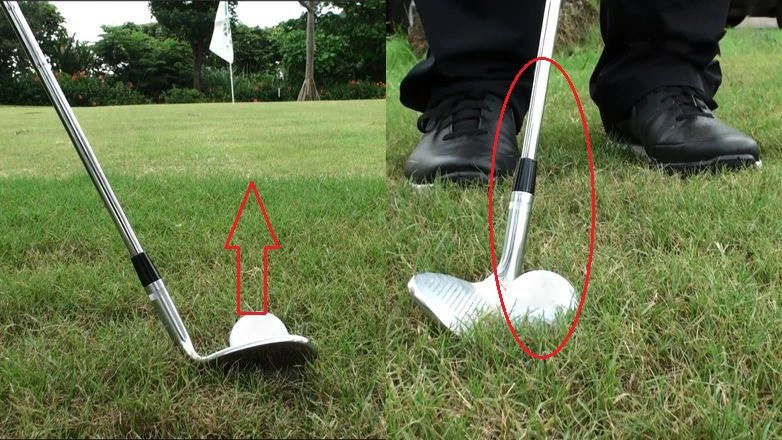
The most important aspect of short game play is not power, but the impact point. For an ideal chip, the clubhead should lightly brush the turf, not dig downwards.
Key techniques to avoid thin and thick shots:
- Focus on the landing point after impact, not the ball itself.
- Keep the clubface open to increase forgiveness.
- Slightly relax your wrists to allow the clubhead to swing naturally.
Many short game aids from Lanifun, such as the short game impact controller and swing face training board, can help players visualize the impact point and improve contact consistency.
How to Improve Chipping Performance?
Chipping is the most commonly used short game technique and the fastest way to improve scores. The following will discuss this from three aspects: motion structure, shot strategy, and chipping drills.
1. Chipping Shot Structure: Simplify the Movement, Increase Repetitiveness
The chipping shot is not a complex movement; the simpler, the more stable:
- Shoulder-led swing, avoid excessive wrist power.
- Keep your lower body stable, avoid excessive movement.
- Swing length determines distance; don't deliberately accelerate or press the ball down.
The quieter the short game, the higher the accuracy.
2. Reading the Line Logic: Think of the Ball's Landing Point, Not the Hole
Many golfers’ chipping inaccurately is due to a “straight-line shot mentality.” The chipping shot should employ a “two-stage thinking”:
- First stage: Ball landing point
- Second stage: Roll trajectory to the hole
The secret to professional golfers’ chipping shots is that they are always hitting the “landing point,” not the hole.
3. Effective Chipping Training Methods
The following are the most effective and fastest-acting chipping drills, which can be practiced at the driving range or at home.
Drill 1: Grid Landing Practice
- Place three target points at 1 meter, 3 meters, and 5 meters.
- Use the same club (Ping or 52-degree wedge).
- Practice landing the ball accurately within the target area.
Purpose: Improve landing accuracy and Greensweep Accuracy.
Drill 2: Single-Leg Weight Training
- Shift your weight to your left foot, lightly touching the ground with your right foot.
- Perform 30 light chip shots.
Purpose: Develop the correct stake angle automatically, improving shot quality.
Drill 3: Chip Shots with Different Clubs
- Choose a 9-iron, Ping, 52-degree wedge, and 56-degree wedge.
- Perform 5 chip shots from the same position with each club.
- Compare the landing differences and roll.
Purpose: Understand the trajectory differences between different clubs and improve technical adaptability.
Greensweep Accuracy Improvement Techniques
The ultimate goal of short game is to land the ball precisely in the safe zone of the green, improving your greensweep accuracy.
The following techniques can significantly improve Greensweep Accuracy:
1. Utilize Terrain Landing Points
A gentler slope in front of the green is best for landing, rather than hitting directly at the flagstick.
2. Control the First Impact Angle
The more consistent the angle of the ball’s first impact, the more predictable the roll distance.
3. Use the Appropriate Opening Angle
A larger opening angle results in a softer, higher, and faster-stopping ball; a smaller opening angle results in more roll and greater stability.
Lianifun’s short game practice mats offer simulations of different grass textures and slopes, effectively helping golfers improve their ability to judge the area around the green.
Three Training Directions for Improving Consistency
The ultimate goal of short game is consistency. The following three directions can make your short game swing more stable and reliable.
1. Fixed Stance Template
Aim for consistent stance on every shot:
- Consistent weight distribution
- Consistent ball position
- Consistent stance distance
- Consistent hand position
It is recommended that golfers use a stance aid for “template-based training” to ensure consistency in their swing motion every time.
2. Fixed Rhythm
Rhythm is the biggest secret to consistency in short game.
Practice method:
- Swing back for 1 second
- Accelerate forward for 1 second
- Maintain a smooth, uninterrupted swing
Using a rhythm timer will yield even better results.
3. Fixed Ball Feel
Short game is ultimately about “feel.” Methods to improve feel include:
- Try short chip shots with varying power (5-10 meters)
- Practice short distances using different opening clubs
- Focus on the ball's landing point and roll distance on each shot, not the result.
Why are professional golfers better at short game? Learn their mindset
The biggest difference between professional golfers and ordinary golfers is not in the swing motion, but in “strategy” and “judgment.”
The three core principles of professional golfers’ short game:
- 1. Always look at the landing point first, then the hole.
- 2. Maintain a consistent hitting rhythm.
- 3. Don't magnify bad shots; a relaxed wrist is more accurate than a tense one.
Lanifun’s short game training kit is developed based on the logic of professional golfers’ short game training, helping amateur golfers build the correct short game framework.
Lanifun's Short Game Training Solutions
As a golf brand focused on the international market, Lanifun offers a variety of short game training products to improve golfers’ skills in short game tips, chipping drills, consistency, and contact. These include:
- Short Game Training Mat (simulating various grass textures)
- Landing Target Trainer (improving landing accuracy)
- Spin Angle and Face Assist (improving open-face stability)
- Short Game Rhythm Trainer (improving consistency)
- Contact Point Correction Trainer (improving contact stability)
Whether you’re a beginner or a competitive golfer, these professional training devices can help you build a more stable and efficient short game system.
Conclusion
Improving your golf score often depends not so much on how far you hit the ball, but on your ability to consistently control your short game. From short game tips, chipping drills, and consistency to contact, each element determines your performance around the green and your Greensweep Accuracy.
With the right training methods and scientific tools, you can not only improve your chipping technique but also significantly enhance stability around the green. Lanifun will continue to provide golf enthusiasts with professional training products to help you improve your short game and achieve lower scores.