
Golf Radar Manufacturing Technology: Sensors, Calibration, and Testing Process
Golf technology products are entering a rapid upgrade era. Golfers are not only pursuing the perfect combination of clubs and balls but are also increasingly relying on data to improve their swing and game performance. Among these technologies, the golf radar launch monitor has become a center of innovation in the industry. It can capture key data such as swing speed, ball speed, flight trajectory, spin rate, angle, and distance error, providing golfers with a sophisticated data analysis experience similar to that of a professional competition.
The growing market demand has led more players to focus on the research and manufacturing systems behind these precise devices: How are the sensors assembled? How are they calibrated? How is data stability ensured? How do factories meet quality standards? This article will delve into the manufacturing technology, introducing the entire process of Golf Radar from sensing and calibration to testing, and, in conjunction with the Lanifun brand positioning, allow buyers and users to understand the structure of a truly professional manufacturing factory.
What is a Golf Radar Launch Monitor? Overview of Technical Basis and Functional Structure
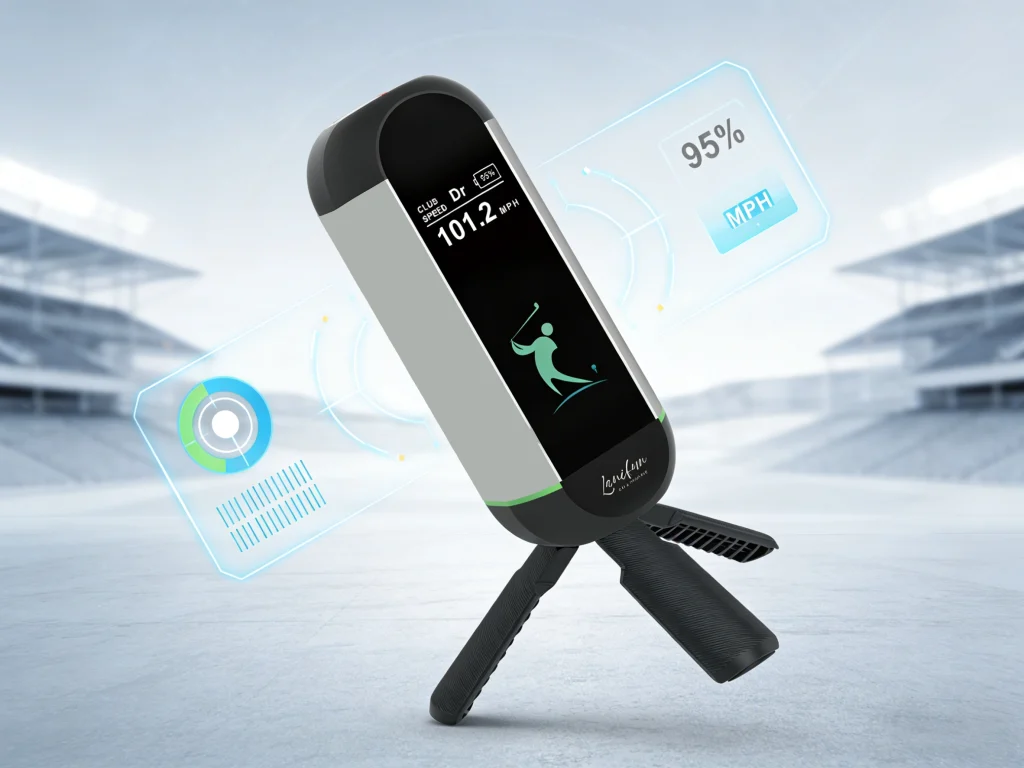
A golf radar launch monitor is a golf data information acquisition system that combines Doppler radar, lasers, and AI algorithms. It can analyze each swing in real time, automatically generating visual trajectory information for training, coaching, equipment selection, and improving professional performance.
Its core structure includes:
- Doppler radar signal receiving array
- High-speed imaging sensor system
- AI physical model calculation module
- Automatic error correction algorithm
- Wireless data output system
- Anti-accidental touch vibration frame
- High-speed ball capture and tracking module
Unlike traditional camera-based training, radar can accurately capture the dynamic changes of a high-speed ball in flight, making it a standard technological device for professional golfers and training.
This field is developing rapidly, and there are not many golf radar manufacturing factories globally, making brands with strong technical capabilities and production capacity even rarer. Lanifun is continuously researching and developing in this field, committed to providing users with an easy-to-use, highly stable, and highly accurate product experience.
Core Technological Components of Golf Radar Manufacturing: Why is the Manufacturing Threshold High?
Many users ask: Why does a golf radar cost hundreds to thousands of dollars? The reasons are as follows:
This device is not traditional hardware, but rather a fusion of:
- Sensor science
- Radar physics
- Signal engineering
- Microcircuit algorithms
- High-speed automatic modeling systems
Therefore, the manufacturing process is extremely complex.
The manufacturing barriers are reflected in the following six areas:
① Extremely high precision requirements for sensor and radar antenna dimensions
Millimeter errors can cause trajectory deviations
② AI trajectory models must be trained with a large amount of real ball data
A single algorithm cannot support real-world errors
③ Hardware and software need to be perfectly matched
Including heat dissipation, power consumption, and rebound structure
④ High-frequency radar waves must comply with regulations and safety standards
Involving national certification
⑤ The factory must have independent development and debugging capabilities
Otherwise, it can only be copied, not precisely manufactured
⑥ High stability requirements for the global market
Temperature, light, and environment must all be suitable
This complexity determines that only brands with professional capabilities can establish a successful launch monitor manufacturing system.
Lanifun has invested years of experience in technology research and development, and does not rely on outsourced factory models, striving to become a long-term manufacturing force in the industry.
Golf Radar Sensor Manufacturing Principles: The Soul Structure of High-Precision Hardware
In the complete golf radar manufacturing process, the sensor is the absolute core.
Currently common sensor categories in the industry:
1. Doppler Radar Sensor
Tracks high-speed movement of the ball
Mainly used for speed and direction calculation
2. Time-of-Flight Ranging Module
Measures the distance and angle of the ball’s movement
3. IMU Inertial Motion Sensor
Detects the trajectory of the golf club
4. High-speed image sensor (optional)
Captures images at the moment of impact
All sensor modules need to undergo:
- Data delay testing
- Signal interference optimization
- Repeatability accuracy testing
- Thermal stability testing
In the Lanifun factory sensor system, we use multi-point detection and a triple feedback mechanism to provide stable, professional, and accurate data output for golf training scenarios.
Radar Calibration Process: How Does the Golf Radar Launch Monitor Ensure Accuracy?
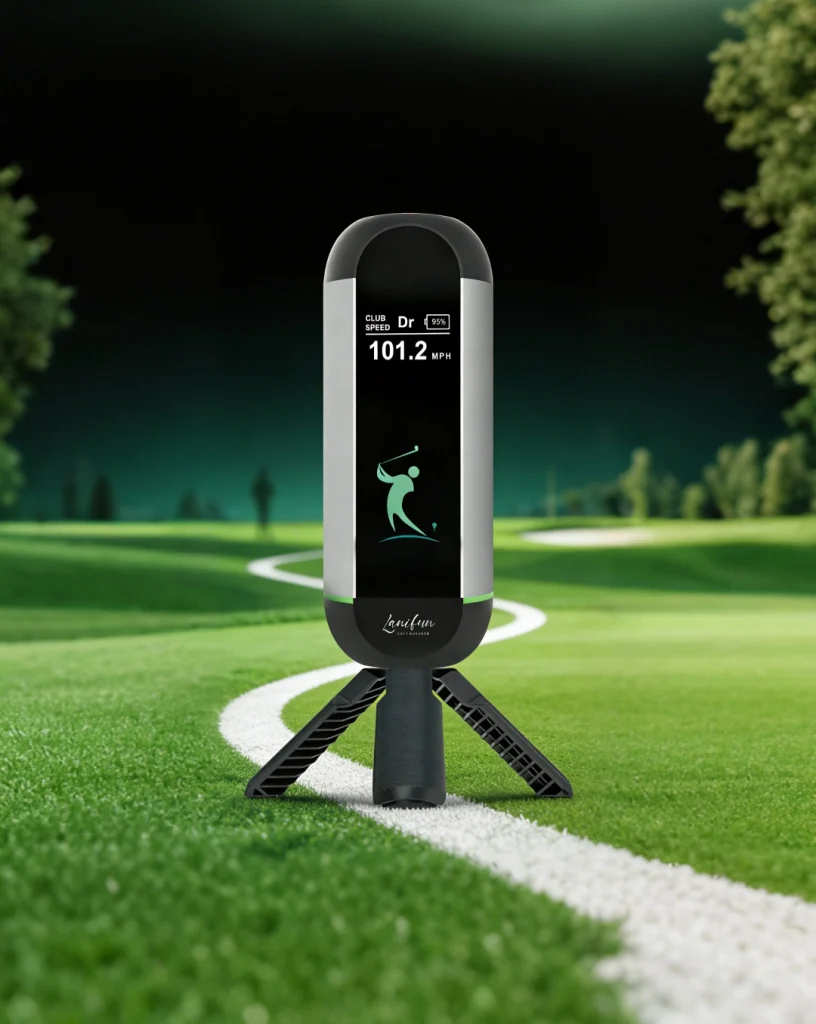
The calibration process determines whether the entire system can be truly used for training, making it the most critical and time-consuming stage in manufacturing.
The calibration process includes:
Step 1: Hardware Zero-Point Calibration
Ensures that the radar does not output drifting data in a static state.
Step 2: Algorithm Function Calibration
Maps real-world data to a mathematical model.
Step 3: Distance Calibration
Testing at different distances For example: 30m / 70m / 100m
Step 4: Angle Calibration
Left curve, right curve, and oblique shot measurements
Step 5: Speed Calibration
Full range from 10m/s to 110m/s
Step 6: Ball Spin Data Compensation
Rotation error correction is automatically handled in the model
This process may require:
- Hundreds of swing tests
- Professional golfer verification
- Outdoor environment simulation
- Wind speed interference compensation
Therefore, Lanifun conducts complete testing before product shipment to ensure that the error level remains stable within the professional range.
Golf Radar Testing Process: Mass Production Quality Testing System
To ensure accurate and reliable data, a rigorous testing process is essential.
Lanifun launch monitor factory manufacturing standards include:
① Environmental Testing
High temperature, low temperature, and humidity changes to ensure global indoor and outdoor stability
② Electromagnetic Testing
Radar equipment must pass EMC standards
③ Drop Resistance and Structural Strength Testing
Ensuring portability and safety
④ Continuous Use Life Testing
Simulating more than 50,000 real-world shots
⑤ Wireless Transmission Stability Testing
⑥ Multi-brand Club Compatibility Testing
Test data is automatically archived to ensure that each radar unit has an independent certificate of conformity and ID tracking.
Why is a Golf Radar Launch Monitor essential for professional golfer training?
- Helps identify the causes of swing errors
- Improves swing consistency
- Helps improve shot distance
- Optimizes spin angle
- More efficient scientific training
- Avoids wasting time on blind practice
- Analyzes club compatibility effects
This is why professional tour training areas almost exclusively use radar monitoring equipment.
Lanifun Brand: A Golf Technology Manufacturing Factory for the Global Market
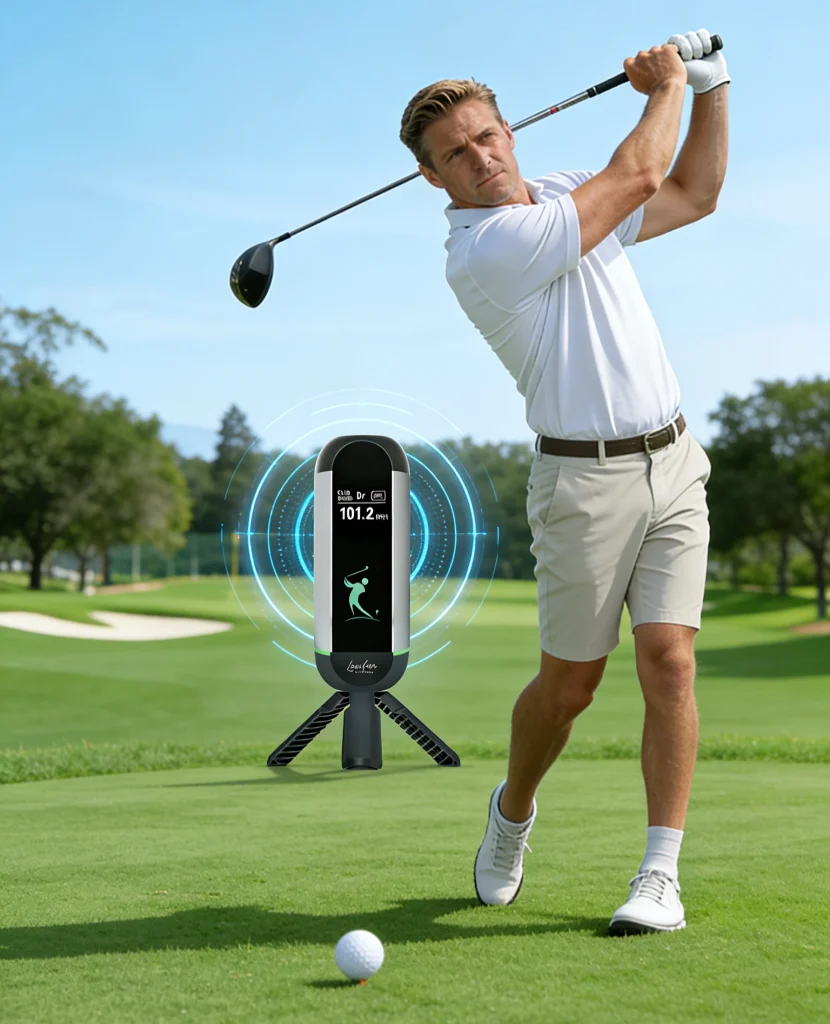
Lanifun is a brand specializing in the supply of golf technology equipment, possessing an independent production system and R&D capabilities:
Brand advantages include:
- Independent R&D algorithm system
- Independently designed radar structure
- Controllable factory manufacturing costs
- Supports OEM/ODM cooperation
- Meets global export standards
- Compatible with multiple platforms
- After-sales technical support
Lanifun’s radar equipment aims not only to provide data but also to establish a complete training logic for golfers:
- Scientific training → Speed improvement
- Data analysis → Swing angle correction
- Long-term use → Stable technical improvement
This is a key reason why Lanifun continues to expand in the golf radar launch monitor field.
Why Choose a Factory Brand for Golf Radar Procurement? – Cost and Technology Comparison Analysis
Many training institutions and distributors ask the same question:
> Should I buy branded finished products or cooperate with a factory?
The reality shows:
Finished product purchase:
High price, weak customization capabilities
Factory purchase:
- Customizable branding
- Adaptable to local markets
- More controllable costs
- Technical services available
Therefore, a launch monitor factory supplier with complete R&D capabilities is more valuable.
Lanifun welcomes cooperation with global channel partners.
Future Development Trends of Golf Radar: AI → The Era of Automatic Swing Training
Three major trends will emerge in future Golf Radar technology:
- ① AI motion recognition replacing manual instruction
- ② VR simulated golf courses combined with radar
- ③ Fully automatic swing trajectory scoring
Technology is reshaping the structure of the golf industry.
In future products, Lanifun will:
- Introduce deep learning models
- Expand global outdoor radar sampling
- Establish a golfer training database
Making sports technology accessible to more people.
Summary: The Importance of Golf Radar Manufacturing Technology
Analysis of sensor manufacturing, equipment calibration, and testing processes shows that:
Golf radar launch monitors are not ordinary electronic products; they integrate radar physics, chip structure, algorithms, and mass production manufacturing systems, requiring the integration of professional factory resources.
Through long-term technological accumulation and a factory manufacturing system, Lanifun ensures stable and accurate product output and provides high-quality golf technology equipment to the global market.